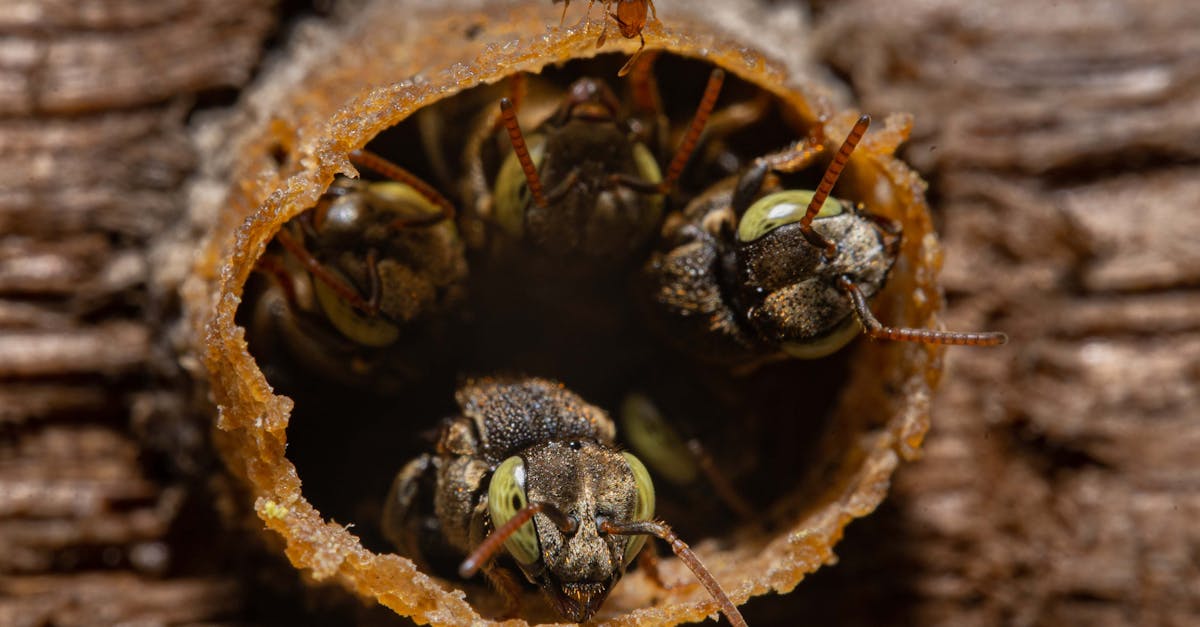
Brazilian researchers just discovered something remarkable hiding in the hives of stingless bees. Geopropolis — a resinous mixture these bees create from tree saps and soil — extended lifespan by 25% in C. elegans worms, our go-to model for aging research.
The study tested geopropolis from two Brazilian bee species: Melipona orbignyi and Melipona quadrifasciata. Both versions dramatically improved the worms’ ability to survive oxidative stress — essentially cellular rust that accumulates as we age.
Here’s what gets interesting: the mechanism appears to work through stress response hormesis. Think of it like a vaccine for your cells. Small doses of geopropolis triggered protective pathways that made the worms more resilient to age-related damage.
The researchers found increased expression of genes linked to antioxidant defense and cellular repair. The worms didn’t just live longer — they stayed healthier longer, showing improved stress resistance throughout their extended lifespan.
C. elegans share about 40% of their genes with humans, including key aging pathways. When something extends their lifespan this dramatically, it usually translates to mammals. The antioxidant and stress resistance mechanisms are particularly well-conserved across species.
Geopropolis differs from regular propolis. While honeybees make propolis purely from plant resins, these stingless bees mix in earth and organic matter, creating a more complex biochemical profile. The Brazilian varieties tested here contained unique compounds not found in typical bee products.
The 25% lifespan extension puts geopropolis in impressive company — similar to what we see from caloric restriction or rapamycin in animal studies.
The Protocol says: Fascinating mechanism, but it’s early days. Geopropolis is nearly impossible to source reliably, and we need mammalian studies before making any recommendations.
The real story here isn’t about buying bee products — it’s about identifying new pathways for triggering cellular resilience.
Research published in Pharmaceuticals by Brazilian scientists studying stingless bee geopropolis effects on aging pathways.